[ISAFIS Gazette #14] The AI Dilemma: Why Communities Are Resisting the Future
Written by: Farrel Ananda Arkent Staff of Research and Discussion
Introduction
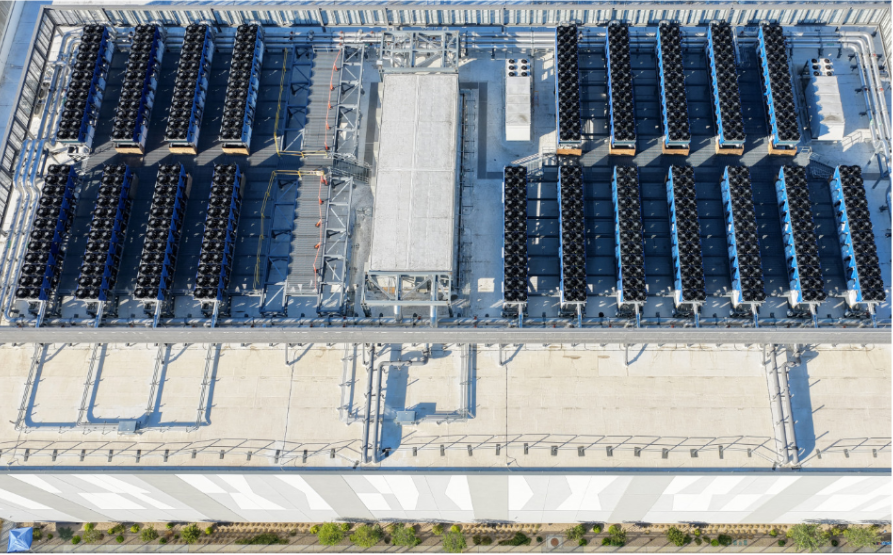
Image 1. A 33 megawatt data centre in Vernon, California, the United States
Source: AFP/Getty Images/Mario Tama
Artificial intelligence has become one of the defining technologies of the global economy, driving governments and technology companies to compete for computing power and digital infrastructure. According to Goldman Sachs (2026), global AI-related investment is projected to reach approximately US$1.019 trillion in 2026, including around US$581 billion in the United States and US$439 billion outside the US. This investment is driving massive demand for data centres, which contain the servers and computing infrastructure required to train and operate AI systems (Lawson et al., 2026). At the same time, data centre expansion is presented as an economic opportunity through investment, employment, digital transformation, AI development, and technological competitiveness. In the United States, Microsoft invested more than US$1.74 billion in its Southern Virginia data centre site between 2010 and 2015, creating more than 200 jobs, demonstrating the potential economic benefits of such infrastructure (Bahas & Wright, 2026; VEDP, 2015).
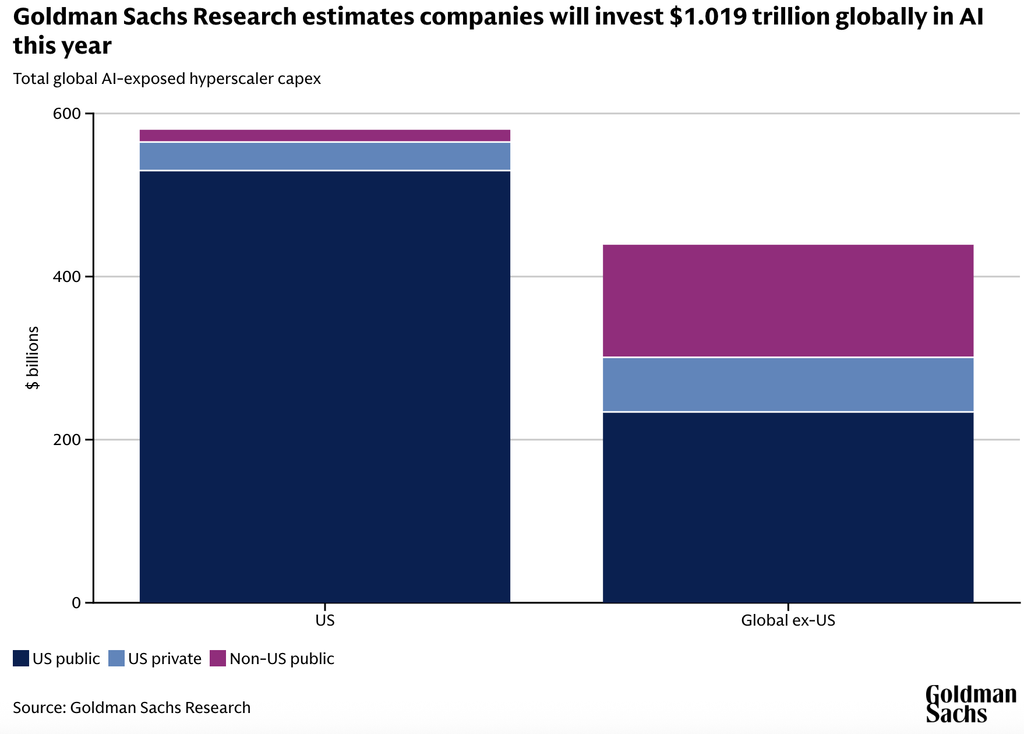
Graph 1. Goldman Sachs Research estimates global AI investment will reach $1.019 trillion in 2026, driven largely by hyperscaler capital expenditure.
From Goldman Sachs (2026).
Despite these economic and technological benefits, data centre expansion has increasingly become a source of controversy among communities and environmental activists. In the first quarter of 2026 alone, 75 US data centre projects worth approximately US$130 billion faced opposition, with some delayed or abandoned (Azhar & Batuzer, 2026). In rural Kentucky, for example, a farming family rejected a reported US$26.48 million offer for land intended for a 2.2-GW AI data centre, despite promises of jobs and investment (Schwartzel, 2026). This opposition is also emerging as a transnational movement. In the United Kingdom, groups including Action to Protect Rural Scotland, Global Justice Now, Pause AI, and Pull the Plug have mobilised against data centre expansion. At the same time, Greenpeace has called for a moratorium on new AI data centres in Australia, and many civil society organisations have also raised concerns across Latin America, Africa, and Asia (Global Action Plan, 2026; Rogers et al., 2026; Robinson, 2026). This raises an important question about why AI infrastructure has generated collective resistance despite its promised economic benefits.
Water Overconsumption
One of the most significant environmental concerns surrounding data centre expansion is its growing water demand. Data centres require water primarily to cool servers, which generate substantial heat during operation. As AI relies on increasingly high-density computing systems, effective cooling becomes essential for maintaining reliable operations. According to Mytton (2021, pp. 1-2), data centre water use can be understood through two related concepts, water withdrawal and water consumption. Water withdrawal refers to freshwater taken from surface or groundwater sources, while water consumption refers to the portion not returned to the immediate water environment, such as water lost through evaporation. This distinction is important because consumption more directly reflects impacts on downstream water availability and ecosystems.
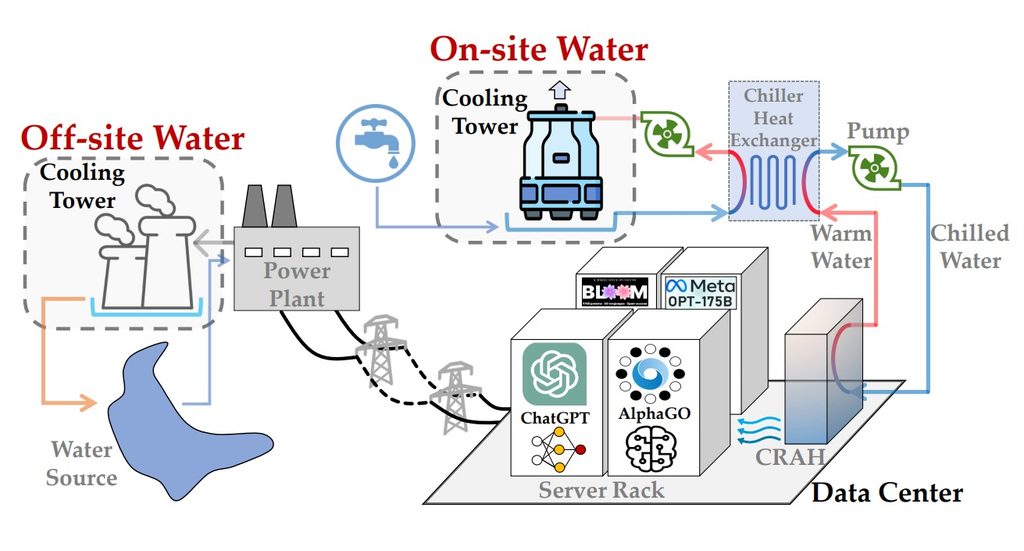
Image 2. Illustration of how data centres use water for server cooling and electricity generation, showing the movement of water through cooling systems and the transfer of heat from servers.
From Li et al. (2025).
In practice, data centres use water primarily for cooling servers, with cooling towers evaporating water to dissipate heat. Data centres can consume approximately 1 to 9 litres per kWh of server energy, depending on climate and cooling design. AI also creates an indirect water footprint through electricity generation, particularly from thermoelectric power plants. In the United States, electricity generation withdraws approximately 43.8 litres per kWh and consumes around 3.1 litres per kWh on average, extending AI’s water footprint beyond the data centre itself (Li et al., 2025, pp. 56-58). This footprint grows as AI systems expand. According to Aczel et al. (2026, pp. 8-12), training GPT-4 required approximately 600 million litres, while GPT-5 is estimated at 1 billion litres. A single AI-generated image carries a water footprint of approximately 29 mL, compared with 4.1 litres for a complex AI video. Data centres’ water footprint reached 4.5 trillion litres in 2025 and is projected to reach 9.3 trillion litres by 2030, equivalent to the annual basic domestic water needs of 1.3 billion people in Sub-Saharan Africa.
However, the challenge posed by data centre water use is not simply the total volume consumed globally, but where that consumption occurs. Privette et al. (2026, pp. 3–5) explain that although data centres account for a relatively small share of global water use, their impacts can be highly concentrated locally, particularly in water-stressed regions. This is evident in Visakhapatnam, India, where Google’s proposed US$15 billion data centre has faced opposition. The city receives around 410 million litres of water daily, below its 480 million-litre requirement, creating a 70 million-litre shortfall. Activists and children have protested with banners stating “We cannot drink DATA”, highlighting concerns over water allocation (Vengattil & Kalra, 2026).
Waste and the Hidden Material Footprint of AI
Beyond their water and energy demands, AI systems also generate a substantial material and waste footprint. Most large-scale AI systems require extensive computing hardware and electronic components, whose production consumes significant quantities of raw materials. For example, manufacturing a 2 kg computer requires approximately 800 kg of raw materials, while the microchips that power AI systems rely on rare earth elements whose extraction can involve environmentally destructive mining practices. These material demands are accompanied by growing amounts of electronic waste. AI-related e-waste is projected to reach approximately 5.2 million tonnes by 2030, adding to the approximately 62 million tonnes of e-waste generated each year globally. AI-related e-waste can also contain hazardous substances such as mercury and lead, which may contaminate soil and water systems when improperly disposed of (Krishna, 2026, pp. 79-81).
A significant share of this waste is generated by the data centres that host AI systems. At the end of their useful life, servers and data-storage devices become waste electrical and electronic equipment (WEEE). According to Gröger et al. (2025, p. 30), based on projected resource requirements and an assumed average technology lifespan of four years, the annual amount of e-waste from data centre servers and storage products was estimated at approximately 0.2 million tonnes in 2023. As data centre capacity expands, this figure is projected to increase to 0.8 million tonnes annually by 2030. Between 2023 and 2030, servers and storage products alone could therefore generate approximately 4.2 million tonnes of electronic waste. This estimate excludes additional waste from other data centre equipment, including network components, cables, batteries from uninterruptible power supplies, transformers, and air-conditioning systems, meaning that the overall e-waste generated by data centre expansion could be considerably higher.
Noise Pollution and Wildlife
Another less discussed impact of data centre expansion is noise pollution. Data centres operate continuously and generate noise from cooling systems, backup diesel generators, and other machinery. Kostick (2026) explains that data centres in Virginia operating 24 hours a day can produce a persistent industrial-scale drone humming sound, with noise levels ranging from approximately 40 to 59 dB. Although these levels are comparable to everyday sounds for humans, their continuous 24-hour presence can disrupt sleep, concentration, and the use of outdoor spaces, with some data centre noise approaching or exceeding the World Health Organization’s recommended limits of 53 dB during the day and 45 dB at night (Envira, 2025). Furthermore, the European Environment Agency (EEA) estimates that environmental noise contributes to around 12,000 premature deaths and more than 48,000 new cases of ischaemic heart disease annually in Europe (Tolotto, 2026). In addition, existing research on wildlife suggests that persistent noise can alter animal behaviour, increasing vigilance and movement and potentially causing stress. Animals exposed to continuous construction noise have also been observed moving toward quieter areas, suggesting that prolonged exposure to artificial noise can affect how wildlife responds to its surroundings.
The concerns of data centre’s noise pollution are particularly evident in Nashville, Tennessee, where a proposed data centre would operate 24 hours a day, seven days a week, next to the Nashville Zoo, which houses more than 3,000 animals, including the endangered clouded leopard. Opposition to the project has included an online petition that attracted nearly 400,000 signatures. At the same time, local authorities considered legislation to prohibit large data centres within half a mile of homes, parks, zoos, and other sensitive locations. The Nashville Zoo has raised concerns that the facility’s constant humming and light could affect animals’ stress levels, photoperiods, and breeding cycles, illustrating how data centre expansion can create environmental concerns beyond energy and water consumption (Henry, 2026).
Conclusion
The expansion of AI and data centre infrastructure presents a growing dilemma between technological and economic development and its environmental and social consequences. While these facilities can attract investment, create employment, and strengthen technological competitiveness, their demands for electricity, water, materials, and land can generate significant local impacts.
This issue is increasingly relevant to Indonesia, particularly in Batam, where Australian AI infrastructure company Firmus Technologies, in partnership with NVIDIA and Singapore-based DayOne, is developing a 360-MW AI Factory campus capable of hosting up to 170,000 NVIDIA AI accelerators. Firmus (2026) stated that it is expected to begin operations in 2027, and the project could generate US$25–30 billion in committed offtake agreements during its first six years. While the project offers an opportunity to establish Batam as a regional AI hub, Indonesia must balance technological ambition with environmental sustainability and community interests.
References
Aczel, M., Chamanara, S., Matin, M., Farsi, A., Marwala, T., & Madani, K. (2026). The Environmental Cost of AI’s Energy Use: Carbon, Water and Land Footprints. United Nations University Institute for Water, Environment and Health. https://doi.org/10.53328/inr26rma002
Azhar, S., & Bautzer, T. (2026, August 10). Lenders scrutinize US data center financing as community opposition builds. Reuters. https://www.reuters.com/legal/transactional/lenders-scrutinize-us-data-center-financing-community-opposition-builds-2026-08-10/
Bahar, D., & Wright, G. (2026, May 4). New evidence on data center employment effects. Brookings. https://www.brookings.edu/articles/new-evidence-on-data-center-employment-effects/
Envira. (2025, May 23). Consequences of noise pollution: How noise affects health. https://envira.global/noise-pollution-consequences-and-how-to-measure/
Firmus. (2026, June). Firmus to Build 170,000 GPU AI Factory Campus with NVIDIA for Global AI-Natives. https://firmus.co/newsroom/firmus-to-build-170-000-gpu-ai-factor-y-campus-with-nvidia-for-global-ai-natives
Global Action Plan. (2026, March 4). Campaigners unite to stop dirty Data Centres. https://www.globalactionplan.org.uk/latest/news/campaigners-unite-to-stop-dirty-data-centres
Goldman Sachs. (2026, August 7). Global AI Investment Is Forecast to Exceed $1 Trillion in 2026. https://www.goldmansachs.com/insights/articles/global-investment-is-forecast-to-exceed-1-trillion-in-2026
Gröger, J., Behrens, F., Gailhofer, P., & Hilbert, I. (2025). Environmental Impacts of Artificial Intelligence. Greenpeace. https://www.oeko.de/en/publications/environmental-impacts-of-artificial-intelligence/
Henry, S. (2026, June 11). Proposed data center near Nashville Zoo sparks heavy pushback. CBS News. https://www.cbsnews.com/news/data-center-nashville-zoo-pushback/
Kostick, H. (2026, June 22). No One Likes Data Center Noise Pollution – The Zoo Animals Won’t Either. Penn Center for Science, Sustainability, and the Media. https://web.sas.upenn.edu/pcssm/commentary/no-one-likes-data-center-noise-pollution-the-zoo-animals-wont-either/
Krishna, R. (2026). Environmental Effects of Artificial Intelligence on the Planet Earth: Mitigation Pathways for a Greener Future. Science Discovery Environment, 1(1), 73–84. https://doi.org/10.11648/j.sdenv.20260101.17
Li, P., Yang, J., Islam, M., & Ren, S. (2025). Making AI Less ‘Thirsty’: Uncovering and addressing the secret water footprint of AI models. Communications of the ACM, 68(7), 54-61. https://doi.org/10.1145/3724499
Mytton, D. (2021). Data centre water consumption. Npj Clean Water, 4(11), 1–6. https://doi.org/10.1038/s41545-021-00101-w
Offutt, M. C., Zhu, L., Lawson, A. J., & Orti, N. R. (2026). Data Centers and Their Energy Consumption: Frequently Asked Questions. Congressional Research Service. https://www.congress.gov/crs-product/R48646
Privette, A. P., Barros, A., & Cai, X. (2026). Data Centers Water Footprint: The Need for More Transparency. AGU Advances, 7(2). https://doi.org/10.1029/2025av002140
Robinson, W. I. (2026, June 23). The Fight Against AI Data Centers Is the Newest Frontier of Global Class Warfare. Truthout. https://truthout.org/articles/the-fight-against-ai-data-centers-is-the-newest-frontier-of-global-class-warfare/
Rogers, C., Levin, S., & Eubanks, P. (2026, July 23). The data center fight is going global. Waging Nonviolence. https://wagingnonviolence.org/2026/07/the-data-center-fight-is-going-global/
Schwartzel, E. (2026, August 15). The ‘Country Hicks’ Who Refused $26 Million from an AI Data Center. The Wall Street Journal. https://www.wsj.com/tech/ai/ai-data-center-rural-america-backlash-c0af4e16
Tolotto, M. (2026, February 11). Noise pollution. EEB. https://eeb.org/en/work-areas/air-and-noise-pollution/noise-pollution/
VEDP. (2015, November 13). Governor McAuliffe Announces Fourth Microsoft Expansion in Mecklenburg County. VEDP. https://www.vedp.org/press-release/2015-11/mecklenburg-microsoft-expansion
Vengattil, M., & Kalra, A. (2026, August 6). Google’s $15 billion India data centre project battles water, wildlife concerns. Reuters. https://www.reuters.com/world/asia-pacific/googles-15-billion-india-data-centre-project-battles-water-wildlife-concerns-2026-08-06/

0 Comments