[ISAFIS Gazette #13] A Poisoned Sky: How Drones Revived Chemical Warfare
Written by: Flicka Miracle Simarmata Staff of Research and Discussion
When we imagine chemical warfare, we often refer to the haunting imagery of the First World War, clouds of roaring yellowish green chlorine gas sweeping across the battlefield. But now, Eastern Europe can no longer depict that signal as easily, as chemical warfare has undergone a terrifyingly advanced evolution. An invisible fight where the main tactic is through utilising common air currents, and weaponising them. However, this is no longer a theoretical scenario, as it is something Ukraine has been experiencing since the 2022 invasion.
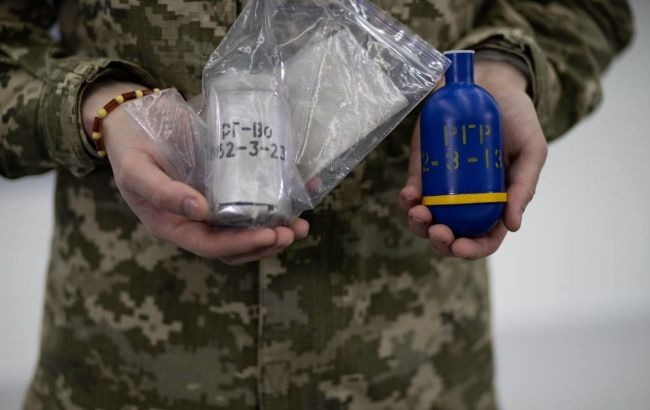
Russian RG-Vo and RGR gas grenade canisters found in Ukraine.
Military Media Center.
According to data from the Ukrainian Ministry of Defense along with technical reports submitted to the Organisation for the Prohibition of Chemical Weapons (OPCW), there have been over 13.500 documented cases of toxic deployment of chemicals that have been recorded (Permanent Representation of Ukraine to the OPCW, 2025; Rozei, 2024), with the frequency of attacks remaining at a high rate. Together with the US, they have accused Russia of using chloropicrin and riot control agents in Ukraine, in violation of the Chemical Weapons Convention (CWC) (US Department of State, 2024; Méheut & Santora, 2024). At the heart of this chemical revival, is a fusion of modern consumer electronics and chemical agents: unmanned aerial vehicles (UAVs).
The combination of non-conventional weapons and commercial UAVs is more than just a gradually changing tactic in the battlefield. Rather, it signifies a fundamental change in 21st-century conflicts. Modern soldiers have revolutionised standoff aerial precision, eliminated the need for conventional subsurface bunkers, and reduced the technical and financial obstacles to chemical warfare by combining inexpensive aerial platforms with hazardous payloads. By accelerating this deterioration of international non-proliferation norms—encouraging use by both state and non-state actors—immense harm to both military and civilian populations are caused. This developing combination of UAVs and chemical warfare threatens the normalisation of non-conventional warfare on a global scale.
UAVs and Chemical Weapons: A Deadly Combination
Historically, chemical warfare has been severely constrained by delivery limitations. Early deployments in the 20th century, especially during World War I, heavily relied on pressurised gas cylinders which were dependent on unpredictable atmospheric winds (Honeyman et al., 2025). These methods required massive logistical efforts, industrial-scale chemical stockpiles, specialised military plans, and high technical expertise in the field, while still posing a constant risk of premature payload leakage at high altitudes. However, drone technology eliminates those obstacles. For a fraction of the price, commercial quadcopters and first-person surveillance platforms offer higher precision delivery compared to traditional guided weapons.
The pre-existing structure is that UAVs can fly into closed spaces. Commercially made gas grenades, such as a K-51 or RG-Vo (CAT-UXO, n.d.-a; CAT-UXO, n.d.-b), or homemade containers such as lightbulbs or glass vials containing liquid chemical agents can be attached to simple 3D-printed release mechanisms rather than relying on large stockpiles. Small drones can be flown straight into screens in ventilation shafts, underground bunkers, or protected trench dugouts that are completely outside of passive defenses and retaining concrete reinforced overheads and traditional anti-artillery entrenchments. By dropping the chemicals at the entrance of a closed space, it effectively optimises the physiological effect with the least amount of chemicals by keeping the vapors confined and concentrated. Additionally, by avoiding conventional counter-battery detection systems and providing operators with total standoff safety, these dual-use platforms can be flown from great distances.
Chemical weapons delivered by drones are a highly effective tool for militaries in overcoming tactical deadlocks in fortified positions. Instant mass death is rarely the main operational goal of drone strikes; instead the military “flushing” approach is used to achieve spatial control (US Department of the Army, 1999). Airborne agents displace breathable oxygen and fill enclosed structures with poisonous vapors after chemical weapons have been dropped directly into ventilation shafts or bunker entrances. This results in violent vomiting, heavy skin burning, extreme coughing, and temporary blindness. This immediate physical trauma produces intense psychological terror and triggers the human will to survive by getting away. Defending soldiers are forced to leave their fortified positions and rush into the open, right into lines of machine gun, artillery, or kinetic drone fire that have been pre-targeted.
The Threat of Proliferation
The threat of increasing use is amplified globally as drone technology proliferates in the hands of states. Great powers and regional actors—such as the United States (US), Russia, Ukraine, Iran, Myanmar, Gulf States, China, and Taiwan—are quickly expanding their drone fleets and studying operational lessons learned from the conflict outside of Eastern Europe. This is exemplified by Iran’s mass use of drones to strike the US and its allies in the Middle East (US Air Force, 2024).
Additionally, the capacity for non-state actors to utilise drone-facilitated chemical delivery poses an immediate, global threat. Violent non-state actors have a long-recorded history of pursuing chemical capacity, from Al-Qaeda’s experiments into crude hydrogen cyanide dispersal devices to the Islamic State’s production of sulfur mustard and chlorine vehicle-borne explosive devices. Non-state actors have also been the first to employ commercial drone weaponisation (Dass, 2021), such as the Islamic State’s drone bombing fleets and insurgent programs in Myanmar and the Middle East. Specified instances of non-state actors carrying out drone-delivered chemical strikes have been few and far between thus far, but their long-record of pursuing chemical weapons combined with their rapid adoption of low-cost UAVs results in a high likelihood for future deployments. Through commercial drones, insurgents, terrorists, and lone-wolf actors have their first viable aerial standoff capability that does not require the immense capital commitment associated with building a conventional air force.
This rapid tactical convergence takes place within an eroding international rules-based order. Since the end of US unipolarity, multilateral disarmament frameworks have continued to break down. The CWC is considered to be systemically under threat from state non-compliance, political shielding, and unilateral actions that delegitimise international law (Friedrich et al., 2026; Kimball, n.d.). Independent authorities have documented this systemic breakdown, and the OPCW has examined how drone technology complicates international chemical security at a time when dual-use commercial technologies slip through traditional regulatory frameworks (OPCW, 2026).
Furthermore, the normalisation of drone-delivery of chemical warfare has catastrophic and long-duration impacts on civilian populations across several interconnected dimensions. Physically, victims contend with chronic and irreversible medical consequences such as chronic obstructive pulmonary disease, pulmonary edema, permanent ocular blindness, severe cutaneous disfigurement, and increased rates of long-term cancer. This physical destruction directly drives socioeconomic collapse within impacted communities that struggle with the loss of household breadwinners, crippling family medical debt, ruined agricultural productivity, and severe social stigmatisation of disfigured survivors. The continuing threat of aerial chemical attacks layer deep psychological damage, as widespread post-traumatic stress disorder, chronic anxiety disorders, and transgenerational psychological injury take root among civilian survivors and children. The environmental fallout of widespread chemical agents poisons soil, built infrastructure, agricultural lands, and local water tables, rendering populated areas toxic hazard zones for decades (UNDRR, 2023; OPCW, n.d.). Exposure to dual-use chemicals such as chloropicrin may also carry genetic and reproductive effects, including mutagenic impacts like inherited chromosomal instabilities and heightened incidence rates of birth defects in future generations.
A New Precedent for Conflict
With the integration of the dual-use commercial drone technology, a significant shift in 21st-century warfare emerges. Modern technologies have successfully eliminated the obstacles that formerly limited the use of chemical weapons by substituting high-signature artillery with agile, inexpensive UAVs. Drones are transforming industrial chemicals and riot control agents into precision terror weapons that can destroy underground defenses, wear out military personnel, and cause severe panic in civilian populations.
The deterioration of international law and its enforcement, particularly global disarmament treaties, accelerates the shift of the technology paradigm (Friedrich et al., 2026; Chemical Weapons Convention, 1993). Urgent multilateral action is needed to avoid a future characterised by normalised airborne chemical fear. The international community needs to impose rigorous accountability under international law, provide strict supply-chain control for dual-use drone components, and enforce the OPCW’s investigative and enforcement responsibilities (OPCW, 2025). The fundamental, ethical, and legal safeguards against chemical warfare that have been put in place over the past century can risk collapsing without proactive international intervention.
References
CAT-UXO. (n.d.-a). K 51 hand grenade. https://cat-uxo.com/explosive-hazards/grenades/k-51-hand-grenade
CAT-UXO. (n.d.-b). RG-Vo Hand Grenade. https://cat-uxo.com/explosive-hazards/grenades/rg-vo
Chemical Weapons Convention, January 13, 1993, https://www.opcw.org/sites/default/files/documents/CWC/CWC_en.pdf
Dass, R. A. S. (2021). Jihadists’ Use and Pursuit of Weapons of Mass Destruction: A Comparative Study of Al-Qaeda and Islamic State’s Chemical, Biological, Radiological and Nuclear (CBRN) Weapons Programs. Studies in Conflict & Terrorism, 47(5), 548–582. https://doi.org/10.1080/1057610x.2021.1981203
Friedrich, B., Schmidt, U., & Walker, P. (Eds.). (2026). Thirty Years of the Chemical Weapons Convention (CWC). Springer Nature. https://doi.org/10.1007/978-3-031-98854-7
Honeyman, D. A., Heslop, D. J., Lim, S., & MacIntyre, C. R. (2025). Chemical Warfare Through the Ages: A Systematic Review From Antiquity to the Present. Journal of Toxicology, 2025, 1-29. https://doi.org/10.1155/jt/7363632
Kimball, D. G. (n.d.). The Chemical Weapons Convention (CWC) at a Glance. Arms Control Association. https://www.armscontrol.org/factsheets/chemical-weapons-convention-cwc-glance-0
Méheut, C. & Santora, M. (2024, May 2). U.S. Accuses Russia of Using Chemical Weapons in Ukraine. The New York Times. https://www.nytimes.com/2024/05/02/world/europe/us-russia-chemical-weapons-ukraine.html
OPCW. (n.d.). What is a Chemical Weapon? https://www.opcw.org/our-work/what-chemical-weapon
OPCW. (2025, November 18). OPCW issues report on its Technical Assistance Visit to Ukraine following an alleged incident of use of toxic chemicals as a weapon. https://www.opcw.org/media-centre/news/2024/11/opcw-issues-report-its-technical-assistance-visit-ukraine-following
OPCW. (2026, June 10). OPCW examines how drone technology changes global chemical security landscape. . https://www.opcw.org/media-centre/news/2026/06/opcw-examines-how-drone-technology-changes-global-chemical-security
Permanent Representation of Ukraine to the OPCW. (2025, June 20). Statement by the Delegation of Ukraineat the 109th session of the Executive Council [Official statement]. https://www.opcw.org/sites/default/files/documents/2025/07/Ukraine_EC-109_National%20Statement_ol_%28e%29%20Agenda%20Item%206%20%28e%29.pdf
Rozei, M. (2024, December). OPCW Finds Toxic Chemical Use in Ukraine. Arms Control Association. https://www.armscontrol.org/act/2024-12/news-briefs/opcw-finds-toxic-chemical-use-ukraine
US Department of State. (2024, June 7). Russia Spreads Disinformation to Cover Up Its Use of Chemical Weapons in Ukraine. https://2021-2025.state.gov/russia-spreads-disinformation-to-cover-up-its-use-of-chemical-weapons-in-ukraine/
UNDRR. (2025). Chemical Warfare Agents. https://www.undrr.org/understanding-disaster-risk/terminology/hips/ch0903
US Air Force. (2024, October 31). Air Force Publication 3-03, Counterland Operations [Military doctrine]. https://www.doctrine.af.mil/Doctrine-Publications/AFDP-3-03-Counterland-Ops/
US Department of the Army. (1999, April 10). FM 17-98 Scout Platoon [Field manual]. https://www.bits.de/NRANEU/others/amd-us-archive/fm17-98(99).pdf

0 Comments