[ISAFIS Gazette #11] Displaced and Unrecognised: How the International System Failed Climate Refugees
Written by: Gracelycia Angeline Serat Staff of Research and Discussion
When wars destroy homes, the world sympathises with its victims. But when climate disasters turn homes uninhabitable, would victims receive the same attention and care? Climate change is no longer only an environmental crisis; looking at the current state of reality, it has been increasingly evident that it has become a contributing factor to displacement, instability, and human security. Data from the International Displacement Monitoring Centre (IDMC) show an annual average of 21.5 million people forcibly displaced by weather-related events between 2008 and 2016 (IDMC, 2016). However, despite its threat to millions of people around the world, victims of climate change have not yet been formally recognised internationally. Because of that, this raises a question: “What makes somebody deserving of legal protection after losing or being forced out of their homes?”
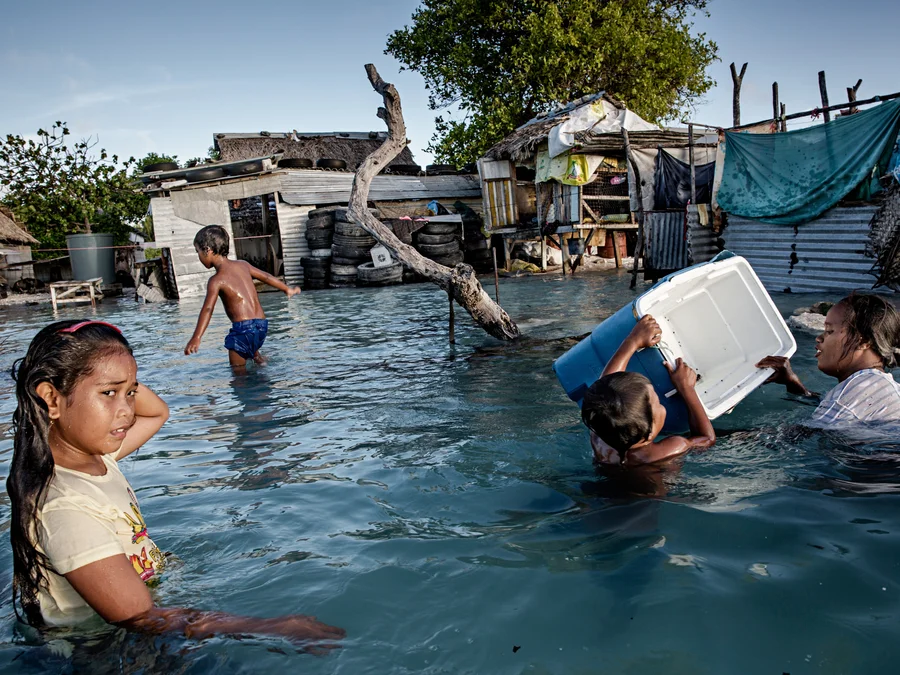
Image 1. Flooding in the Pacific island-nation of Kiribati.
Source: LightRocket/Jonas Gratzer
What is a ‘refugee’?
According to the 1951 Refugee Convention, ‘refugee’ is defined as any person who, owing to well-founded fear of being persecuted for reasons of race, religion, nationality, membership of a particular social group, or political opinion, is outside the country of his nationality and is unable or, owing to such fear, is unwilling to avail himself of the protection of that country (United Nations Convention Relating to the Status of Refugees, 1951). The establishment of this term provides an internationally recognised definition of what classifies someone as a ‘refugee’, as well as the rights and protection they deserve with the status that they have. As of June 2025, the United Nations High Commissioner for Refugees (UNHCR) recognised approximately 42.5 million refugees, including people in refugee-like situations and people in need of international protection under the UNHCR mandate (UNHCR, 2025). This association has been further reinforced as escalating global conflicts are forcing people to flee from their home countries as conflicts break out. However, how far does this definition encompass today’s realities of displacement?
The term ‘climate refugee’ was only introduced in 1985 in a paper published by the United Nations Environmental Programme (UNEP), which defined it as those people who have been forced to leave their traditional habitat, temporarily or permanently, because of a marked environmental disruption that jeopardised their existence and/or seriously affected the quality of their life. This includes those who are temporarily displaced because of environmental stress, and those who have been permanently displaced and resettled in a new area (Hinnawi, 1985, pp. 4–5). Notably, unlike the 1951 Refugee Convention, this definition encompasses internally displaced persons (IDPs), those who flee within their own country’s border, which broadens the scope of who is considered a climate refugee. Climate refugees, while not often shown in the media, have been a recurring problem throughout the years. Their numbers are also projected to rise significantly in the future, with an estimate of 200 million climate refugees by 2050 (Myers, 2002). However, despite climate change being one of the major contributing factors of conflict and displacement, with roughly 75% of displaced individuals living in highly climate-vulnerable countries (UNHCR, 2024c), they are not formally recognised under international law.
The Failure of the International System
Climate refugees — whether IDPs or cross-border climate migrants — should be recognized under international law. The lack of legal recognition for climate refugees is arguably one of the biggest failures of the international system in upholding humanitarian protection towards victims of climate change. It is important to note that according to the UNHCR, the term ‘climate refugee’ is not an officially recognised term in international law, since the 1951 Refugee Convention only offers protection to those fleeing war, violence, or conflict who have crossed an international border to find safety, without mention of climate disasters. Due to this, those fleeing across the border due to climate-related issues are often referred to as ‘displaced’ rather than recognised as refugees (UNHCR, 2024a). This legal distinction, although seemingly administrative, creates major humanitarian consequences, especially for climate migrants, due to the lack of recognition of the ‘refugee’ status; those forced to migrate due to climate issues can’t claim the same rights as refugees. Because of this, climate refugees become vulnerable in their destination countries, and often end up in double displacement, as many who flee often settle in camps located in ‘climate hotspots,’ and are faced with hazardous heat stress per year. These host countries are mostly in Africa, with 15 of the hottest refugee camps in the world, and by 2050, are projected to face nearly 200 days or more of hazardous heat stress per year (Garder & Merchant, 2026).
Climate change is driven by fossil fuel emissions that are generated by many countries, with its biggest contributors being China, the United States, and India. However, while it is a collective cause, instead of collective efforts and responsibility to solve issues surrounding climate change, the consequences of it are left to be borne by low- to middle-income countries. These countries include Sudan, Syria, Haiti, and other low- to middle-income countries, which are reported as the biggest hosts of climate displacements (UNHCR, 2024b).
Climate migrations are often considered a threat multiplier, especially in these host countries, as they further exacerbate existing social, political, and economic vulnerabilities in low- to middle-income nations. Climate-migration host countries often face security issues, including food security, as resources become scarcer due to increased demand from climate migrants, leading to domestic tensions due to poor natural resource management, and causing public outrage and a rise in anti-migration sentiments. Due to the lack of resources, host nations often become dependent on developed nations for international aid to maintain stability and respond to disasters caused by an increase in climate migrations. That said, while some high-income countries provide international aid for these host countries, officially, they do not have any legal responsibility to do so, meaning their assistance is purely dependent on their willingness to provide this aid to these host countries.
Ironically, the countries most responsible for the climate crisis bear the least legal responsibility for its victims. High-income countries are responsible for the majority of global carbon emissions, far exceeding the share contributed by climate refugee host countries. Yet, these countries do not have a legally binding obligation to assist climate refugees, showing the structural injustice in the current international legal system. This legal gap means that those who migrate across borders due to climate-related issues are not classified as refugees, hence are not eligible for the assistance that conventional refugees receive. This leaves the burden on host countries to provide aid to these climate migrants, and the assistance that climate refugees receive relies on the host countries’ ad hoc national policies and discretionary measures, which do not guarantee protection for these climate refugees. Furthermore, most host countries are low- to middle-income countries that can only do so much with the resources that they have. The limitation that host countries have eventually led to serious domestic security concerns for these countries.
A Step Closer to Recognising Climate Refugees
The recognition of the ‘refugee’ status for climate migrants is not merely symbolic, but also a step in the right direction in addressing the international legal blind spot, ensuring the legal protection and security that climate refugees are currently denied. Climate change is certain and is expected to exacerbate further as time goes on. And while every human contributes to it, only some bear the consequences. Ideally, states should work together to anticipate and mitigate the destruction caused by it. But without legal obligation or political initiative, collective action has not followed. While the UNHCR has the mandate and the moral authority to change this, constrained by the political will of its member states, it has not.
The system needs an amendment and/or additional protocol to the 1951 Refugee Convention to extend protection to not only conflict-induced displacement, but also climate-related causes. In addition, recognition for climate refugees is necessary to hold states (especially high-income states with the largest share of carbon emissions) accountable and obligated to provide legal protection to victims of climate change. These steps are necessary to ensure security for climate refugees and to protect low- to middle-income countries from disproportionately bearing most of the consequences of climate change. It’s time to recognise the status of climate refugees; otherwise, climate refugees will remain among the most vulnerable victims of a crisis they did little to create.
REFERENCES
Garder, A., & Merchant, A. (2026, February 18). Refugees Twice Over: Climate Migration and ‘Double Displacement’. USCRI. https://refugees.org/refugees-twice-over-climate-migration-and-double-displacement/
Hinnawi, E. E. (1985). Environmental refugees. United Nations Environmental Programme.
IDMC. (2016). Grid 2016: Global Report on Internal Displacement. https://www.internal-displacement.org/globalreport2016/
Myers, N. (2002). Environmental refugees: A growing phenomenon of the 21st century. Philosophical Transactions of the Royal Society B: Biological Sciences, 357(1420), 609–613. https://doi.org/10.1098/rstb.2001.0953
United Nations Convention Relating to the Status of Refugees, July 28, 1951, https://www.ohchr.org/en/instruments-mechanisms/instruments/convention-relating-status-refugees
UNHCR. (2024a). UNHCR Projected Global Resettlement Needs 2026. https://www.unhcr.org/publications/2026-projected-global-resettlement-needs-pgrn
UNHCR. (2024b). No Escape: On the frontlines of climate change, conflict and forced displacement. https://www.unhcr.org/publications/no-escape-frontlines-climate-change-conflict-and-forced-displacement
UNHCR. (2024c, November 12). How climate change impacts refugees and displaced communities. https://www.unrefugees.org/news/how-climate-change-impacts-refugees-and-displaced-communities/
UNHCR. (2025). Mid-year trends: Forced displacement in the first half of 2025. https://www.unhcr.org/media/mid-year-trends-2025

0 Comments